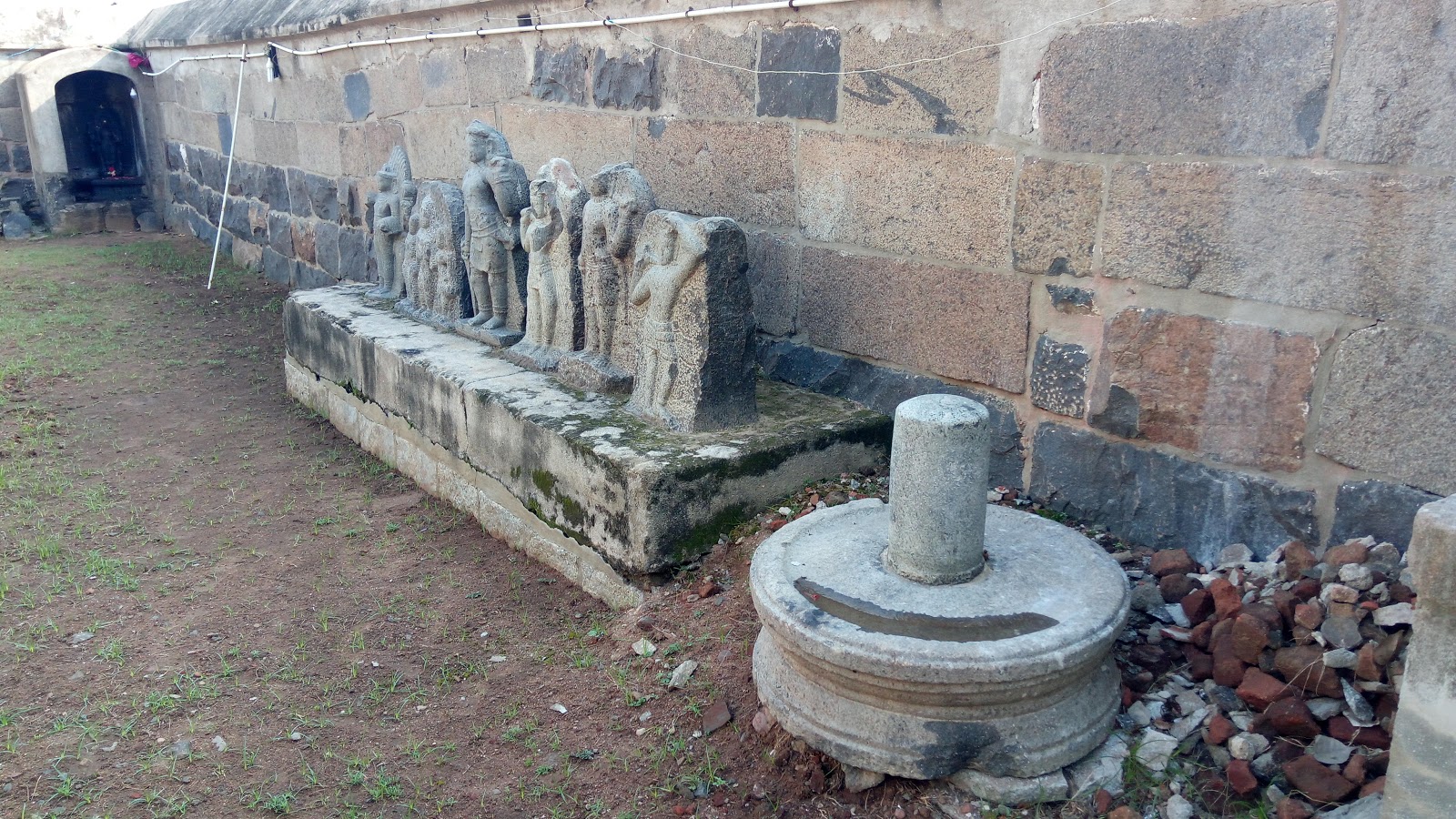
Mayiladuthurai, a town in Nagapattinam district serves as an important hub for many of the significant temples in South Tamilnadu. So I decided to embark on a pilgrimage to Paadal petra sthalams and Divya desams around Mayiladuthurai, details of which are given below. It was a three day trip starting from Chennai and each day is presented as a part. We started from Chennai (Korattur) at 5 am in the morning to reach Thiruvamur (via Arasur road - although it is longer by 10 kms road it is better than Vikravandi Panruti route since the road is bad) by 9:30 am.
1. Thiruvamur, birthplace of Appar
Thirunavaukarasar also known as Appar was a seventh century saint poet and prominent among the 63 nayanmars. He was born in Thiruvamur, a small beautiful village located at about 11 kms from Panruti.
His childhood name was Marulneekiar. His sister, Thilagavathiar was betrothed to a military commander who died in a war. When his sister was about to end her life, he pleaded with her not to leave him alone in the world. She decided to lead an ascetic life and bring up her only brother.
In his early boyhood life, Appar was very much interested in Jainism and started studying its scriptures. He went away from home and stayed in their monastery and was renamed Darmasena.Appar had travelled to ThiruPadhiripuliyur (Cuddalore) to join a Jain monastery where he was given the name Dharmasena.
After a while, afflicted by a painful illness in his stomach , Dharmasena returned home. He prayed for relief at the Siva temple where his sister served and was cured. He sang his first praise on Lord Siva at Veeratteswarar Temple at Panruti where he was cured of his stomach ailement. After hearing his song, Lord Himself named as Navukkuarasar(king of tongue - meaning one who is proficient in composing great poems)He was also involved in converting the Pallava king, Mahendravarman to Saivaism. The house where he lived initially has been converted into a temple and named as Appar Swamy Temple. There is a 1200 years old tree in this temple called as Kalar Ugai which had helped in curing the stomach ailment of Appar, few leaves of the tree were offered as Prasadam.


At a walkable distance from this temple, there is a small and beautiful Lord Shiva Temple. The presiding deity is Pasupathieswarar and the Ambal Thirupura Sundari. This is one of the vaipu sthalam where Appar has made a reference to in his thevaram pathigam. Lord Murga in this template has been sung by Arunagirinathar temple in Thirupugazh.

2. Chidambaram Temple
After having darshan at Thiruvamur, we proceeded to Chidambaram via Vadalur and Bhuvanagiri to reach by 11:45 am. Whenever there is an opportunity we would visit Chidambaram and since it was enroute to Mayiladuthurai we decided to make an halt and had delightful darshan of Natarajar and Govindaraja Perumal. Good thing about Chidambaram is that you will see lot of Prasadam distribution and were lucky to get some ghee laden Kesari and Curd rice which quenched our hunger. Since there is lot of info about Chidambaram online, I am not repeating them here.
Then we started our travel to Mayiladuthurai and reached by 1:45 pm. We decided to have lunch at Kaliakudi hotel which is near Mayiladathurai tower clock as per the recommendation from our cab driver. Lunch was excellent and we decided to have our food in this hotel only for the next two days stay there. Then we moved to Ranga Residency where we have booked our stay for two nights. This residency is situated at about 2 kms from the town in a quiet residential area and just adjacent to Parimala ranganathar temple. Triple room was booked for INR 1100 per day as per the prevailing deal and it was good value of money. Facilities were decent considering the town infrastructure.
3. Therazhundur Vedapureerwarar Temple (Paadal Petra Sthalam)
After resting for a while at the residency, we started our journey around 3:30 pm from Mayiladuthurai to visit Therazhundur. After travelling about 11 kms on the Kumbakonam highway turn left onto the road leading to Komal, temple is located at about 4 kms on this road. There is an arch for Kambar memorial. We reached the temple around 4:30 pm and it was opened by 5 pm.
Therazhundur is a small village in the nagapattinam district and famous two major temples - Vedapureeswara temple and Amaruviappan temple (Divya Desam). Both the temples are exactly situated opposite to each other with a street separating them, another unique feature which is rarely found.This village has the privilege of being the birth place of Kambar, a great tamil poet who wrote Ramayana in Tamil.Many Tamil poets, statesmen, kings, and common people have praised Kambar for his Kambaramayanam, which has more than 11,000 songs and 45,000 lines, forming one of the greatest of Tamil epics.
We first visited the Vedapureeswarar Siva temple. The very look of the temple clearly tells this is a age old temple (at least 1500 years old). Features of the temple are


4. Therazhundur Sri Devadirajan Temple (Divya Desam)
After having darshan at Vedapureeswarar temple, we just walked across to the Devadirajan temple across the street.
As the name Devadirajan suggests, 13 feet Lord Vishnu stands like the king of Devas showering His Grace showering on devotees. This temple is one (23rd) among the 108 Divya Desams of Lord Vishnu sung by Thirumangai Aazhwar.(45 pasurams)

5. Kuthalam Uktha Vetheeswarar Kovil (Paadal Petra Sthalam)
From Therazundhur, then we travelled back on the same Komal road back into Kumbakonam highroad. After reaching Kumbakonam road, turn left and continue to reach Saradha marriage Mahal, at this turn right and continue on Uthira street for about 1.5 kms to reach this temple at Kuthalam. We reached around 6:15 pm.
Kuthalam is a small village in nagapattinam district, ancient name of this place is Thiruthuruthi


After having a wonderful darshan at Kuthulam, we decided to go to Thiruvelvikudi which is about 2.5 kms from Kuthalam. Continue on Pandanallur-Kuthalam road for about half km and turn right into Kallanai-Poompuhar road to reach this temple. We reached this temple around 7:15 pm.
7. Sri Vanmutti Perumal Temple (Athi Varathar)
Most of us are aware about recent Athi Varathar darsanam in Kancheepuram and how nearly 10 million (1 crore) people flocked and waited in several miles queue for hours together to have a few seconds glimpse of the magnificent Lord Varathar. Many people suffered hardship, some unfortunate ones lost their lives in their mission to see the Lord. While it is good to see that such a vast number of people have a devotional aspiration but the motive behind such a response needs to be carefully analyzed - did they respond just because it is a rare event occurring once in 40 years? This seems to be the case and it is time people should rethink about their devotional outlook - there are several Divya Desams and Paadal Petra Sthalams where the Lord is always bestowing His Grace; one can have a peaceful and hassle free darshan in these temples. In spite of this, if fig tree idol is what you are looking at, then you can visit Sri Vanmutti Temple near Mayiladuthurai.
After visiting Thiruvelvikudi temple, we proceeded to Vaan Mutti perumal temple at Kozhikuthi. From Thiruvelikudi, you have to take Kallanai Poompuhar road towards Poompuhar and travel for 5 kms to reach this place.
If you are travelling from Mayiladuthurai, you have travel west on Kumbakonam highway for about 5 km and turn right just before Margasagayar Sivan temple, travelling 2 kms on this road will take you to the temple. Features of this temple are


 Day 1 is complete with this visit and concluded by 8 pm to return to Mayiladuthurai.
Trip Map is given below for reference
Click here for trip map - Courtesy Google Map
Links given below for day two and day three travel guide.
Day 2 travel guide
Day 3 travel guide
1. Thiruvamur, birthplace of Appar
Thirunavaukarasar also known as Appar was a seventh century saint poet and prominent among the 63 nayanmars. He was born in Thiruvamur, a small beautiful village located at about 11 kms from Panruti.
His childhood name was Marulneekiar. His sister, Thilagavathiar was betrothed to a military commander who died in a war. When his sister was about to end her life, he pleaded with her not to leave him alone in the world. She decided to lead an ascetic life and bring up her only brother.
In his early boyhood life, Appar was very much interested in Jainism and started studying its scriptures. He went away from home and stayed in their monastery and was renamed Darmasena.Appar had travelled to ThiruPadhiripuliyur (Cuddalore) to join a Jain monastery where he was given the name Dharmasena.
After a while, afflicted by a painful illness in his stomach , Dharmasena returned home. He prayed for relief at the Siva temple where his sister served and was cured. He sang his first praise on Lord Siva at Veeratteswarar Temple at Panruti where he was cured of his stomach ailement. After hearing his song, Lord Himself named as Navukkuarasar(king of tongue - meaning one who is proficient in composing great poems)He was also involved in converting the Pallava king, Mahendravarman to Saivaism. The house where he lived initially has been converted into a temple and named as Appar Swamy Temple. There is a 1200 years old tree in this temple called as Kalar Ugai which had helped in curing the stomach ailment of Appar, few leaves of the tree were offered as Prasadam.


 |
| Kalar Ugai Tree - 1200 years old - believed to have cured the stomach ailment of Appar |
At a walkable distance from this temple, there is a small and beautiful Lord Shiva Temple. The presiding deity is Pasupathieswarar and the Ambal Thirupura Sundari. This is one of the vaipu sthalam where Appar has made a reference to in his thevaram pathigam. Lord Murga in this template has been sung by Arunagirinathar temple in Thirupugazh.
Since this is located in a small village, not many people were there in the temple. It seems only during Sadaya natchara days, devotees will be visiting.

2. Chidambaram Temple
After having darshan at Thiruvamur, we proceeded to Chidambaram via Vadalur and Bhuvanagiri to reach by 11:45 am. Whenever there is an opportunity we would visit Chidambaram and since it was enroute to Mayiladuthurai we decided to make an halt and had delightful darshan of Natarajar and Govindaraja Perumal. Good thing about Chidambaram is that you will see lot of Prasadam distribution and were lucky to get some ghee laden Kesari and Curd rice which quenched our hunger. Since there is lot of info about Chidambaram online, I am not repeating them here.
Then we started our travel to Mayiladuthurai and reached by 1:45 pm. We decided to have lunch at Kaliakudi hotel which is near Mayiladathurai tower clock as per the recommendation from our cab driver. Lunch was excellent and we decided to have our food in this hotel only for the next two days stay there. Then we moved to Ranga Residency where we have booked our stay for two nights. This residency is situated at about 2 kms from the town in a quiet residential area and just adjacent to Parimala ranganathar temple. Triple room was booked for INR 1100 per day as per the prevailing deal and it was good value of money. Facilities were decent considering the town infrastructure.
3. Therazhundur Vedapureerwarar Temple (Paadal Petra Sthalam)
After resting for a while at the residency, we started our journey around 3:30 pm from Mayiladuthurai to visit Therazhundur. After travelling about 11 kms on the Kumbakonam highway turn left onto the road leading to Komal, temple is located at about 4 kms on this road. There is an arch for Kambar memorial. We reached the temple around 4:30 pm and it was opened by 5 pm.
Therazhundur is a small village in the nagapattinam district and famous two major temples - Vedapureeswara temple and Amaruviappan temple (Divya Desam). Both the temples are exactly situated opposite to each other with a street separating them, another unique feature which is rarely found.This village has the privilege of being the birth place of Kambar, a great tamil poet who wrote Ramayana in Tamil.Many Tamil poets, statesmen, kings, and common people have praised Kambar for his Kambaramayanam, which has more than 11,000 songs and 45,000 lines, forming one of the greatest of Tamil epics.
We first visited the Vedapureeswarar Siva temple. The very look of the temple clearly tells this is a age old temple (at least 1500 years old). Features of the temple are
- The presiding deity is Vedapureeswarar and the Ambal Soundara Nayaki.
- The Theertham is Sidhaamritam. Thirugnanasambandar composed the Pathigam.
- As per the legend, once Lord Siva and Lord Lord Vishnu were engaged in a game of dice and Parvati was the referee to the game. Parvati rules in favour of Vishnu in a game dispute and Lord Siva curses her to be born in earth as a cow. This is depicted as a painting in the temple mandapam leading to the main shrine. Having separated from His consort, Siva happened to be reciting Vedas in this temple, hence the name Vedapureeswarar
- King Oorduvaradhan did a penance on Lord Brahma and got a Chariot. With this, he had the power to fly in the chariot and had become arrogant and incurred the wrath of the rishis, whose curse resulted in the chariot coming crashing down into this place . Ther (Chariot) Azhundia (stuck) Oor (place), hence the name Therazhundur


4. Therazhundur Sri Devadirajan Temple (Divya Desam)
After having darshan at Vedapureeswarar temple, we just walked across to the Devadirajan temple across the street.
As the name Devadirajan suggests, 13 feet Lord Vishnu stands like the king of Devas showering His Grace showering on devotees. This temple is one (23rd) among the 108 Divya Desams of Lord Vishnu sung by Thirumangai Aazhwar.(45 pasurams)
- Moolavar is Devathi Rajan Grand Standing Posture, East Facing and Utsavar is Aamaruvi Appan and Goddess is Sengamala Valli .
- As per the legend, Lord Brahma stole all the cows of Ayarpadi which were under Lord Krishna's custody and locked them at Theruzhunthur. Lord Krishna, taking cognizance of this,created a whole new herd of cows at Gokulam. Lord Brahma then asked Lord Krishna to forgive him and persuaded to stay permanently at this place and bless the devotees.
- Unique feature of this temple is that Garuda is present in the main shrine along with the Lord the reason being Garuda gave the Vimanam at this temple at Thiru Vazhandur( the Gold ornament was given to Thiru Narayanan at Melkote near Mysore). Happy at this gesture of Garuda, the Lord accorded him a special status at this temple with a position alongside him at the sanctum sanctorum, a unique feature at a Divya Desam. Normally one finds Garuda opposite the Lord but here he is seen next to the Lord Himself.
- One can see picture of Ramanujar fondly holding the Melkote Urchava moorthy near Thayar Sannidhi. There seems to be a link between this temple and Melkote Cheluva Narayana perumal temple.
- There is a separate sannidhi for Kamban at this temple. The place where Kamban resided, on the Sannidhi street, has now been turned into a beautiful new ‘Kamban Mandapam’.

5. Kuthalam Uktha Vetheeswarar Kovil (Paadal Petra Sthalam)
From Therazundhur, then we travelled back on the same Komal road back into Kumbakonam highroad. After reaching Kumbakonam road, turn left and continue to reach Saradha marriage Mahal, at this turn right and continue on Uthira street for about 1.5 kms to reach this temple at Kuthalam. We reached around 6:15 pm.
Kuthalam is a small village in nagapattinam district, ancient name of this place is Thiruthuruthi
- The presiding deity is Sonnavaararivar, Ukta Vedeeswarar and the Ambal Arumbanna vanamulaiyaal, parimala sugandha nayagi
- All three - Appar, Thirugnanasambandar and Sundarar have sung the praises of the Lord of this temple.
- The Sthala Vriksham is Kutrala Maram and the Theertham Kaveri Sambandar, Appar and Sundarar composed the Pathigam.
- Legend has it that Parvati is said to have expressed her desire to Siva to have the experience of an earthly wedding; Siva obliged and so she was reborn as the daughter of Bharata Muni. Responding to the prayers of Bharata Muni Siva emerged from the lingam at Tirutturutti and lent His hand in marriage to Parvati.
- The name Sonnavaararivaar stems from this legend that Siva kept his word and the name Manavalanathar is attributed to Him on marrying Parvati. Agni and Varunan are said to have been blessed by Shiva here.
- Priest of the temple was kind enough to explain the important aspects of the temple. Lord Shiva had come to the temple to marry Parvati and as an evidence the tree (Sthala vriskham) Uthala tree is said to have come along with the Lord as a canopy. There is a small elevated platform at the base of this tree and even now a couple of foot wear is laid inside a glass box. This footwear is said to be the Lord's foot wear, also the small flower buds from this temple is said to possess enormous medicinal value, priest collected some of them and gave it to me as Prasadam.
- Sundarar got cure for his skin ailments after worshiping the Lord here, also it is believed that people with skin diseases can get cure by praying here.


 |
| Uthalam Tree - Lord Siva's Footwear can be seen inside the glass box |
6. Thiruvelvikudi - Kalyanasundareswarar Temple (Paadal Petra Sthalam)
After having a wonderful darshan at Kuthulam, we decided to go to Thiruvelvikudi which is about 2.5 kms from Kuthalam. Continue on Pandanallur-Kuthalam road for about half km and turn right into Kallanai-Poompuhar road to reach this temple. We reached this temple around 7:15 pm.
- The presiding deity is Kalyanasundareswarar, Manavaleeswarar and the Ambal Parimalasugandha Nayaki
- Both Thirugnanasambandar and Sundarar have sung one pathigam each.
- The Theertham is Mangala Theertham Sambandar and Sundarar composed the Pathigam.
- Legend has it that Siva is said to have blessed the marriage ceremony of a devout prince here, hence the name Kalyanasundareswarar.
- Shiva is said to made the promise to marry Parvati here, hence the name (Sonnavaararivaar).
- As per the priest, this temple is more significant than Thirumanancheri where people offer prayers for removal of obstacles in marriage. Since this is the place where the engagement and commitment to marry Parvati has happened, praying at this temple is said to remove marriage obstacles. When we visited, we could see a yagna being performed by the parents of a son whose marriage was getting delayed due to various reasons.
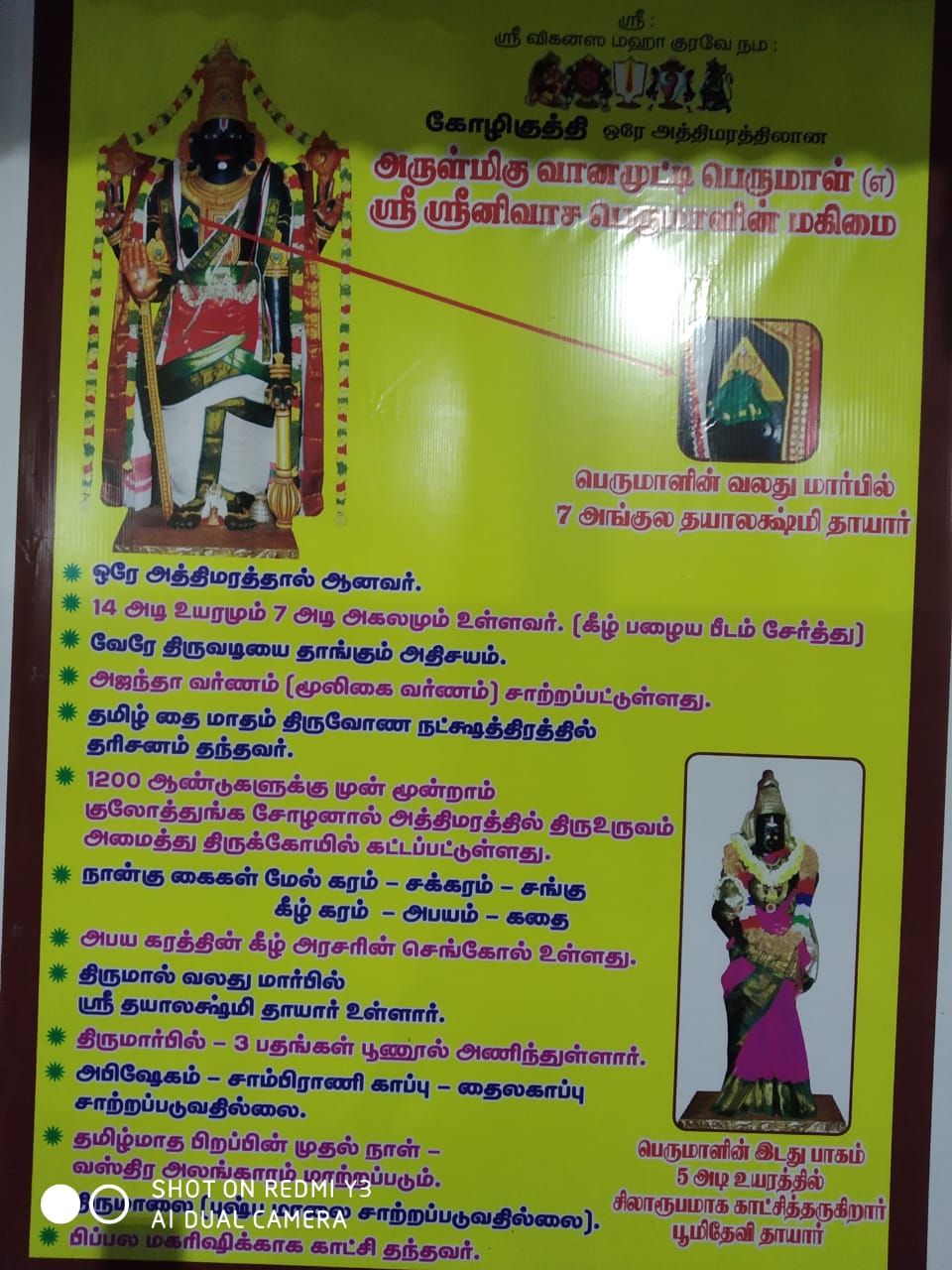
7. Sri Vanmutti Perumal Temple (Athi Varathar)
Most of us are aware about recent Athi Varathar darsanam in Kancheepuram and how nearly 10 million (1 crore) people flocked and waited in several miles queue for hours together to have a few seconds glimpse of the magnificent Lord Varathar. Many people suffered hardship, some unfortunate ones lost their lives in their mission to see the Lord. While it is good to see that such a vast number of people have a devotional aspiration but the motive behind such a response needs to be carefully analyzed - did they respond just because it is a rare event occurring once in 40 years? This seems to be the case and it is time people should rethink about their devotional outlook - there are several Divya Desams and Paadal Petra Sthalams where the Lord is always bestowing His Grace; one can have a peaceful and hassle free darshan in these temples. In spite of this, if fig tree idol is what you are looking at, then you can visit Sri Vanmutti Temple near Mayiladuthurai.
After visiting Thiruvelvikudi temple, we proceeded to Vaan Mutti perumal temple at Kozhikuthi. From Thiruvelikudi, you have to take Kallanai Poompuhar road towards Poompuhar and travel for 5 kms to reach this place.
If you are travelling from Mayiladuthurai, you have travel west on Kumbakonam highway for about 5 km and turn right just before Margasagayar Sivan temple, travelling 2 kms on this road will take you to the temple. Features of this temple are
- The idol stands majestic with a height of about 14 feet
- The root of the tree is still intact, essentially the template has been built around the tree with the root representing the lotus feet of Lord Vishnu
- Temple is more 1200 years old - built by Kulothunga Chola
- The main deity (moolavar) is Vanmutti Perumal and Urchavar is Yoga Narasimhar.
- Pippalar Maharishi got rid of his curse and skin ailment after worshiping here. As per the legend, Pippalar was shown guidance by Marga Sagaya Eswarar (this temple is also nearby enroute) to do penance and absolve his previous birth sins of killing people.


Trip Map is given below for reference
Click here for trip map - Courtesy Google Map
 |
| Courtesy - Google Maps |
Links given below for day two and day three travel guide.
Day 2 travel guide
Day 3 travel guide